
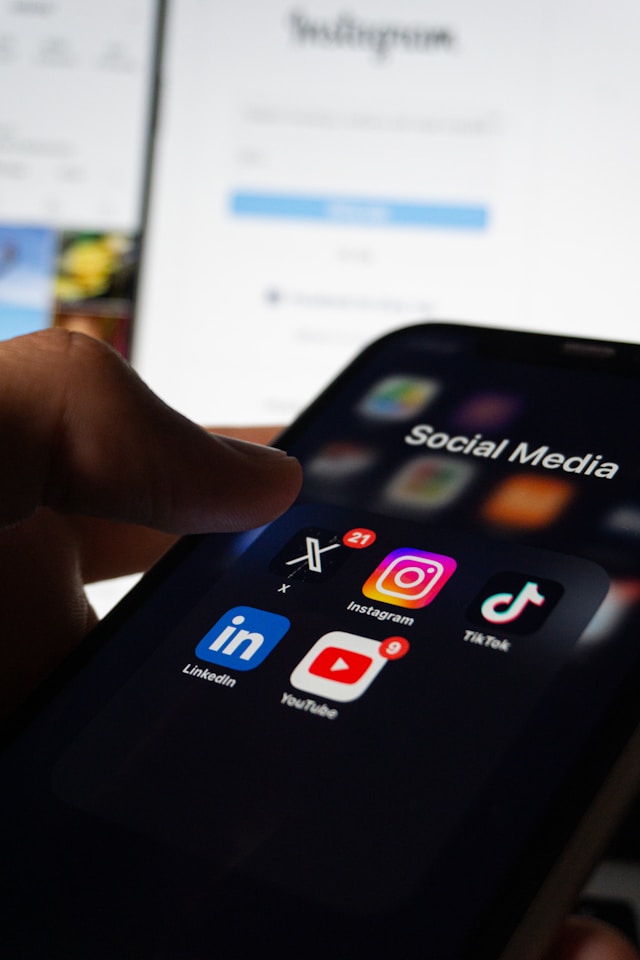
TORONTO – The federal government is expected to propose a ban on social media use for children under 16 as part of the long-anticipated “Online Harms Bill,” which would be introduced tomorrow, Wednesday.
The news—first reported by The Globe and Mail (here) and then expanded by Global News (here) — comes as several countries, including the United Kingdom, Spain and South Korea, are also considering similar bans, following the example of Australia, where a comparable measure has already come into force.
Malaysia has also recently introduced restrictions on social media accounts for users under 16, while Brazil now requires minors’ accounts to be linked to a legal guardian to ensure proper supervision. In France, a law setting the minimum age for social media use at 15 was approved by the National Assembly in January and is moving toward a final vote, with the goal of being in place for the start of the school year in September.
In short, there is growing global interest in protecting young people from what has effectively become a true “digital jungle,” where anything can be found and dangers for minors are constantly present.
The idea has gained further momentum in Canada after members of the Liberal Party of Canada passed a motion at their annual convention in April to advance this policy. At the local level, provinces are also taking steps: in April, Manitoba announced its intention to introduce a similar ban, and other provinces—including Ontario, Alberta, and New Brunswick—are also considering comparable measures.
Experts, however, are divided: some argue that a ban is necessary to limit the power of social media companies and to counter the negative health effects—especially mental health—linked to social media use among young people. Others believe that minors should instead be taught how to properly use the internet, rather than being prohibited from it.
There is also a purely technical challenge: it is difficult to fully prevent teenagers—often more digitally skilled than adults—from bypassing such restrictions. Evidence of this comes from Australia: a study published in April by the Molly Rose Foundation (here: MRF_Australia-Social-Media-Ban-Research_Briefing-April-26) found that 61% of Australian teenagers aged 12 to 15 still have social media accounts despite the ban, while 70% say bypassing the restrictions is “easy.”
Enforcement is left to the platforms themselves, which are required to verify users’ age before allowing registration, using identity documents and available online data estimates (for example, in the case of existing accounts). But young people, as we know, have grown up with the internet. And above all: do the “tech giants” really have an incentive to lose such an engaged audience?
Photo by Berke Citak on Unsplash