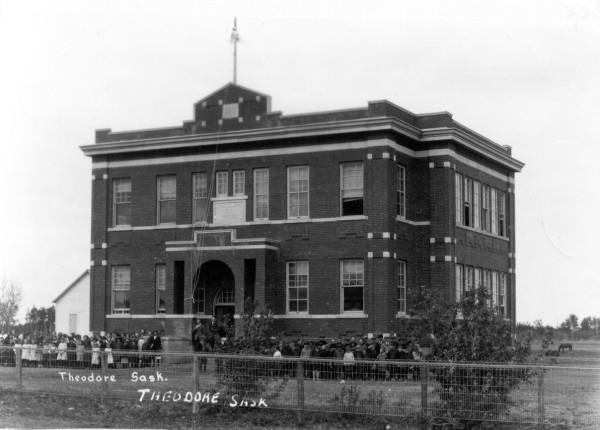
 [GTranslate]February 25, 2021. Thursday’s Supreme Court of Canada (SOC) decision re the Theodore school question in Saskatchewan offers an insight into constitutionally guaranteed denominational rights and the primacy of the Constitution over subordinate (inferior) legislation. →
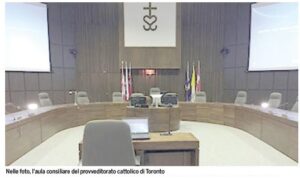
 [GTranslate]TORONTO – Pity the children. Sympathize with their parents, I thought, as I listened to the audio of the meeting of the trustees at the TCDSB, Thursday, February 18. A contractor, commissioned to report on the state of ventilation systems in several of the Boards schools, was being scolded for not immediately knowing what the municipal building code said about a particular type of window opening permitted.
→
 [GTranslate]The Federation of Law Societies in Canada’ Annual Report (2017) indicated 127,707 licensed lawyers in the country, 82% of them, 104,497, still classified as “active”.
When combined with approximately 37,000 paralegals (Census 2006), that represents a ratio of one “legal expert” for every 218 Canadians. Their services keep societies “civil” and the marketplace “free”.
But what happens when lawyers seek to silence, repress contrary opinion to favour their client and the Courts allow it to take place, direct – in layman’s terms, order – certain usage of vocabulary/pronouns in a Court environment? →
[avatar user=”volpej” size=”thumbnail” /]
[GTranslate]TORONTO – In the end, from a personal perspective, one is left only with one’s good name – a reputation. Corporately, a legacy against which the public can measure value to societal standards. Both are built incrementally by sweat and tears. The ride is not always smooth.
The Corriere Canadese, in one form or another, has been in the service of the Italian Canadian community since 1954. Its purpose, from my point of view, has always been to integrate immigrant value structures into those newer ones that individual newcomers and their families were creating, in the course of their interaction with other disparate immigrant groups.
→
[avatar user=”volpej” /]
TORONTO – The school systems in the Toronto area are straining under the pressures brought to bear by health issues related to Covid-19. That is a “no brainer”. We could go through the diagnostic already familiar to every parent whose children might otherwise today be in school. But there would be no point.
[avatar user=”volpej” size=”thumbnail” align=”left” /]

[GTranslate]TORONTO – It has been a year. Of observing. Of learning. Of second-guessing. Of wondering if anyone knows what’s going on. Suppose our system or our leaders are structured and equipped to deal with a crisis. Twelve months into this pandemic and we don’t seem to be any further ahead. →
[GTranslate]TORONTO – There is a limit to the people’s patience. Opinion polls (the most recent by Abacus, February 4) suggest the public is growing distrusting of “political leadership” – irrespective of party preference. It is increasingly concerned about health (physical and mental), education, the economy and a “return to normalcy”.
[gtranslate]TORONTO – In a crisis, there is always a reset, a reshuing of the deck (of cards). Covid-19 is the crisis of the day – everywhere and in all aspects of life – government, economy, education, ethics… the list goes on. It is a crisis whose proportions and dimensions are fast approaching the uncontrollable. In
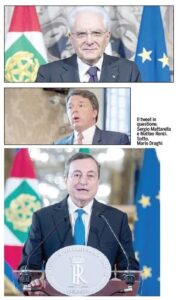
TORONTO – In una crisi, c’è sempre un momento in cui si resetta, un rimescolamento del mazzo di carte. Covid-19 è la crisi del giorno – ovunque e in tutti gli aspetti della vita – governo, economia, istruzione, etica … l’elenco continua. Si tratta di una crisi le cui proporzioni e dimensioni si stanno rapidamente allargando.