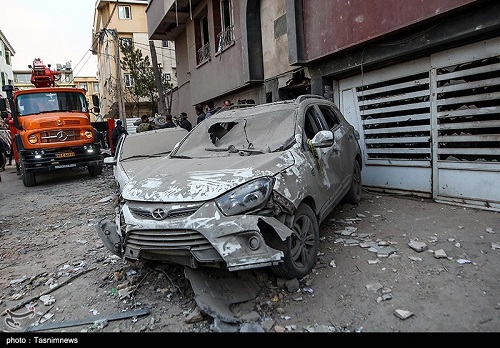
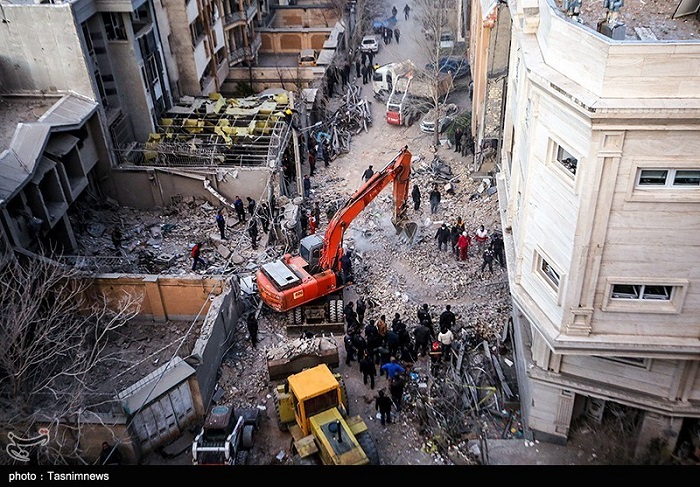
TEHERAN – In the first three days of the recent military crisis between the United States, Israel and the Islamic Republic of Iran, from February 28 to March 2, 2026, the Middle East has entered an unprecedented phase of tension. A phase that, with the killing of Ali Khamenei, the 86-year-old leader of the Islamic Republic, and the expansion of the war to the southern Persian Gulf countries, has taken on dimensions far beyond a limited confrontation.
In the early hours of February 28, coordinated attacks by the United States and Israel against military targets in Iran began. Hours later, the death of the leader of the Islamic Republic was officially announced—an event that pushed Iran’s political structure into a sensitive and unprecedented phase. Following the announcement, seven days of national mourning were declared. At the same time, several senior military commanders were also killed in the strikes.
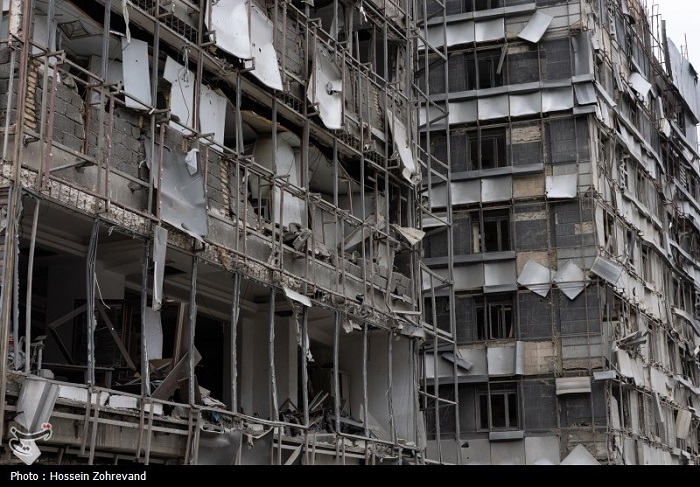
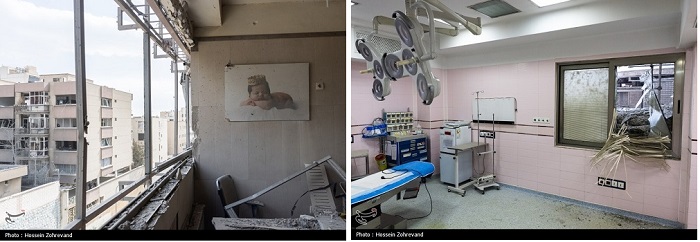
With the continuation of heavy bombardments, particularly in Tehran, normal life in the ten-million-resident capital has nearly come to a halt. Widespread closures, disruptions to municipal services, and public anxiety about the future have deeply affected the country’s atmosphere – in the pics below, by Hossein Zohrevand, the Gandi Hospital in Teheran. Many citizens are following developments with apprehension, awaiting clarity about the war’s course.
In response, Iran has carried out intermittent missile and drone attacks against targets in Israel as well as bases associated with U.S. forces in the region. The conflict has spread to Saudi Arabia, Bahrain, Qatar, Kuwait, and the United Arab Emirates, and several countries have raised their military alert levels.
In Washington, the U.S. president has stated that the military confrontation “could continue for another four to five weeks.” So far, six American soldiers have lost their lives, and a number of others have been wounded—figures that could increase domestic political pressure on the U.S. administration.
As a result of the bombardment of American and Israeli targets, some news sources have reported that more than 1,500 members of Iran’s Islamic Revolutionary Guard Corps (IRGC) have been killed. On the second day of the military attacks, a bomb struck a girls’ school in the city of Minab in southern Iran, located near an IRGC service/military facility, killing 159 schoolchildren. The Iranian Red Crescent Society has announced that the number of civilian casualties during the first three days of fighting exceeds 550.
Among Iranians living abroad, reactions have been divided. Some believe that continued military strikes could ultimately lead to the collapse of the Islamic Republic’s structure. Others, however, fear that the government may weaken under military pressure but not fall, remaining in a fragile, unstable state—a scenario that could have unpredictable consequences for the country’s future. The fate of thousands of political prisoners has also become a serious public concern.
At the same time, there is growing anxiety over whether Iran, after the end of military operations, might face a situation similar to that experienced by countries in the region, such as Syria, Iraq, or Libya, or whether it will take a different path toward freedom, democracy, and becoming a “normal” country on the global stage.
Several fundamental questions now stand before the region:
- Will Iran’s power structure act with stability and cohesion after the killing of its leader, or will a period of internal rivalry and instability begin?
- Will the expansion of attacks to southern Persian Gulf countries lead to their formal entry into the war?
- Will the United States and Israel escalate their operations, or will they move toward containing tensions under international pressure?
- And ultimately, will this crisis turn into a protracted war lasting weeks or even months?
The first three days of this crisis have shown that regional equations are rapidly shifting, and the answers to these questions will shape the political and security future of Iran and the Middle East.
Article by Mohammad Tajdolati – Editor in Chief of the magazine online “Persian Mirror”