
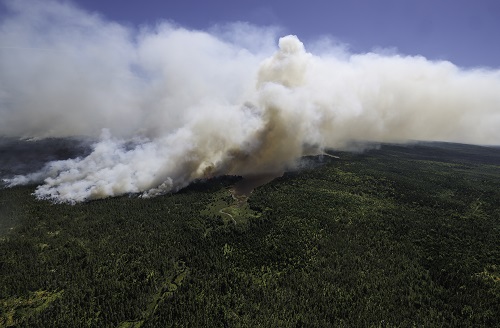
TORONTO – Summer is ending but not wildfires, that continue to ravage the entire country, with the sole exception of Prince Edward Island. According to data from the CIFFC (Canadian Interagency Forest Fire Centre), there were 568 active fires at 1pm today, 77 of which were out of control (the updating in real time by CIFFC is here).
The most affected provinces and territories are, as always, the central-western ones, but this year’s news is an “unprecedented wildfire season” in Atlantic Canada: New Brunswick, Nova Scotia, Quebec, Newfoundland and Labrador. This isn’t just the data, but also the firefighters’ union sounding the alarm about the need for better preparedness, denouncing the lack of changes—in terms of resources and training—to deal with such scenarios.
According to Joe Triff, president of the Atlantic Provinces Professional Firefighters, progress is needed to ensure that fires like the one that hit Tantallon in 2023 (which caused extensive damage and forced the evacuation of 16,000 people) do not happen again, and this season’s wildfires have highlighted this need.
“No new deployment policies, no protocols, no new hands-on training, we are futher behind because we have issues with the personaly protective equipement” he said, according to Global News (here). “We clung to the hope that we would learn lessons about that fire and do better next time, and Susie Lake (one of the large fires that burned in Nova Scotia this summer) was an example of us not doing better…”.
Forest fires in the Atlantic provinces have reached uncontrollable levels: homes have been damaged, people have been evacuated… “…these wildfires close to homes require a lot of people on the ground quickly and we’re not calling people in” he said, pointing to poor management of off-duty firefighters. He also said the lack of critical urban interface training to manage where densely populated areas meet the woods is also another issue.
According to Triff, there is a need for training: this has been done elsewhere and worked, like in New Brunswick, where Fredericton Fire Chief, Dwayne Killingbeck emphasizes that “we’re getting to the next level of preparedness and our ability to respond as we move from year to year. This was a significant year for us, because of that specialty training” he said, according to Global News.
Another front is the public education, which is often lacking too. “That’s the number one thing that all fire departments can do is to educate the public and make sure that we are making wise decisions to protect our environment” says Rob Nichol, Fire Chief of Saint John, New Brunswick, according to Global News.
In short, there is a lot to do to prevent Canada from burning more and more, summer after summer.
In the pic above, a wildfire in Nova Scotia (from Twitter X – Nova Scotia Government @nsgov)