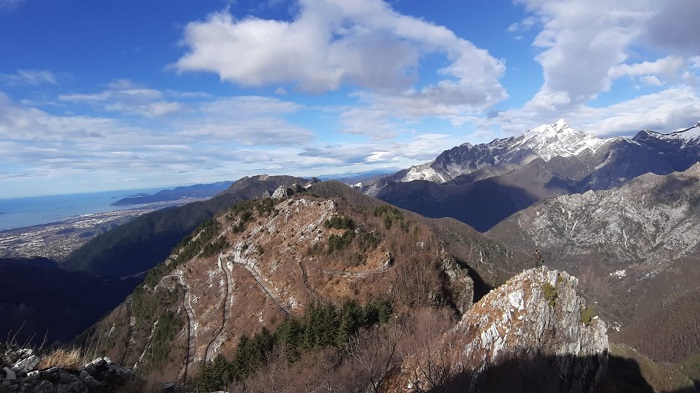
TORONTO – Between sea and mountains, movement and stillness, chaos and quiet — this is where Alberto Galeotti, known as KinRossArt, found his voice. Born in Massa, a little tuscan town cradled between the Mediterranean Sea and the Apuan Alps, and now based in Toronto, Alberto shapes his art at the intersection of its Italian roots and Canadian freedom: inner landscapes transformed into fluid gestures, colors that speak of tension and harmony, of chaos and calm.
Each painting is a suspended moment, a threshold between anticipation and action, between the familiar and the unknown. An experience that can be truly felt by visiting the group exhibition “Territories”, now on display at the Cloverdale Common, Cloverdale Mall, 250 The East Mall, Etobicoke, Toronto (Wednesday to Saturday, 10 a.m. to 5 p.m., until March 5).
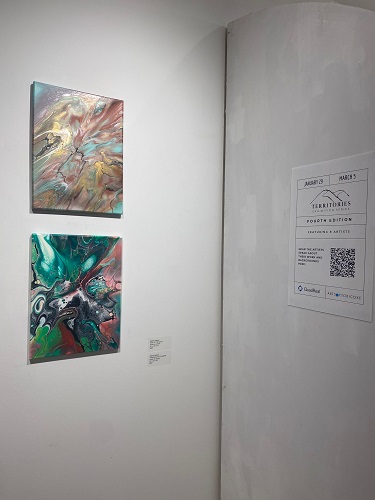
In the exhibition, among the works of various other artists, there is KinRossArt’s series Via Lucis – where he transforms everyday spaces into stages of discovery and transformation – the artist invites viewers to pause, look closer, and feel.
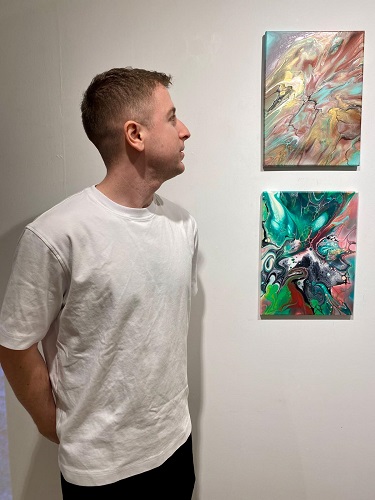
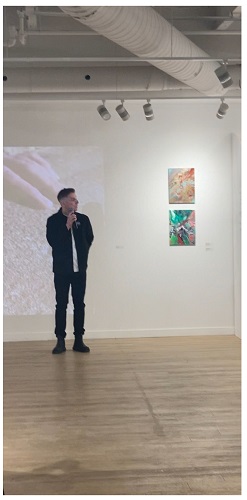
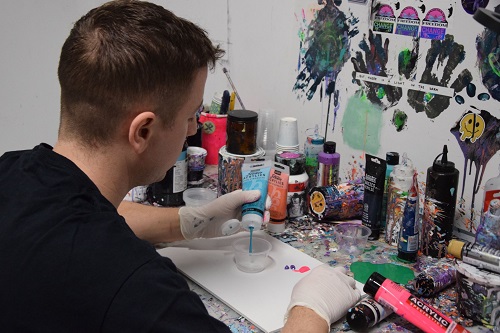
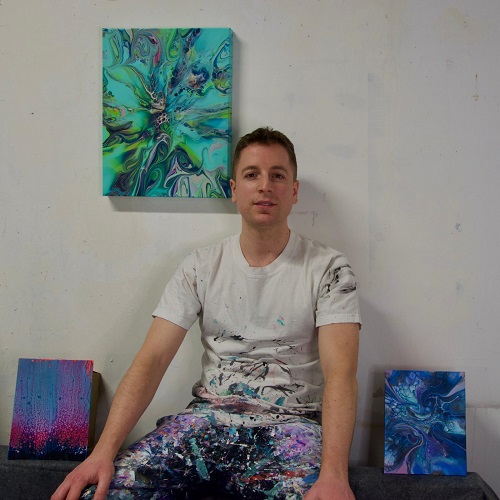
On the occasion of this exhibition, we sat down with Alberto (in the pic below) to explore his world, where every brushless gesture becomes language, memory, and a dialogue with those who engage with his work.
Can you tell us about your origins and how they shaped your artistic identity?
“Surroundings matter. DNA matters. We’re shaped by what we see long before we know how to name it. Growing up between the sea and the Apuan Alps, you’re constantly surrounded by beauty without asking for it. Marble quarries, sculptors at work, fine art as something lived rather than visited. It seeps in quietly. Even something as simple as watching the Mediterranean change every day, or turning your head and seeing the mountains so close they feel protective, teaches you about space. About balance. About restraint and chaos existing side by side.”
How did moving to Canada influence your work?
“For me, moving to Canada wasn’t a break from who I was, but an expansion. The freedom here, geographically and culturally, allowed me to grow into my own voice as an artist. There’s space to experiment, to connect across cultures, to evolve. That sense of openness continues to shape my work every day.”
How would you describe your work?
“My practice is rooted in abstraction and fluidity, using mixed media and primarily premium acrylics, combined with pouring mediums that allow the paint to move. I don’t use traditional brushes. The work is gesture-led. That’s central to how I paint.”
Do intention and unpredictability play a role?
“What matters to me is intention. As I develop a body of work, I refine techniques and gain control over how the paint behaves. I’d say I control about eighty percent of the painting. The remaining twenty percent belongs to unpredictability. Gravity, movement, and material all play a role. That balance between control and surrender is what keeps the work alive. Even the unpredictability becomes part of the intention. It’s how I translate a moment, a feeling, or an idea into something that can resonate with others.”
Can you explain the themes in “Via Lucis”?
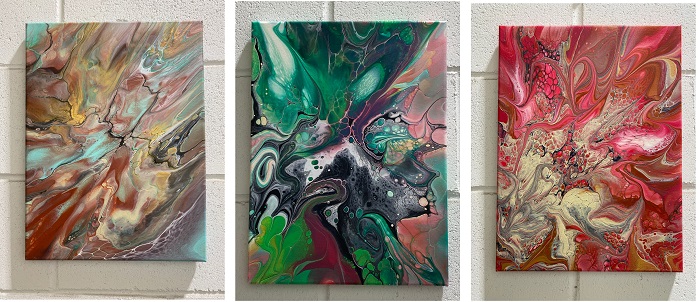
“The themes of territory, crossing, and transition come into focus very clearly in the works I’m presenting in Territories. The two pieces shown in the exhibition are part of a larger triptych titled Via Lucis. The series is inspired by Dante Alighieri’s Divine Comedy, but not in a literal sense. For me, it functions as a metaphor for the journey each of us goes through. Movement, uncertainty, arrival, and transformation. These are universal experiences.”
How does life in Toronto influence your work?
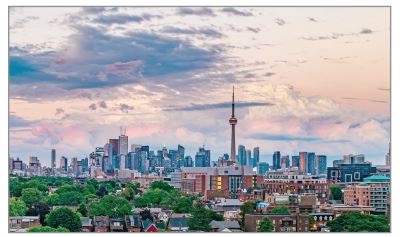
“Living and working in Etobicoke, I’m constantly moving through different environments. The same routes, the same streets, the same spaces, repeated every day. At first, those spaces feel unfamiliar. Over time, you start noticing details. The rhythm changes. Eventually, there’s a moment when the space no longer feels external. You belong to it. That sense of gradual belonging is central to my work.”
What does this first exhibition in Toronto mean to you?
“An opportunity to be more present within the community that I live and work in. That sense of belonging matters to me. What I find most fulfilling right now is dialogue with the public, with other artists, and with people from different fields. Feedback, questions, curiosity, those exchanges shape the work as much as time in the studio. Experimentation is equally important. I don’t place boundaries on my practice. I’m open to new materials, new formats, and collaborations beyond the traditional art world.”
What do you hope for the future of your work?
“Looking ahead, I want the work to speak to a broader audience. Eventually an international one, but first I want to continue growing within Canada. The response I’ve received here has been generous and thoughtful, and I value that deeply. For me, expansion has to come from depth, not speed.”
What is art for you?
“At its core, art is a language. Long before words, it was a way to transmit memory, culture, and experience. For me, the conversation can happen through color, gesture, and space. When a collector chooses to live with one of my pieces, that dialogue deepens even further. It becomes an ongoing exchange.”
Info: https://albertogaleotti.my.canva.site/kinrossart – Instagram: https://www.instagram.com/kinrossart/)
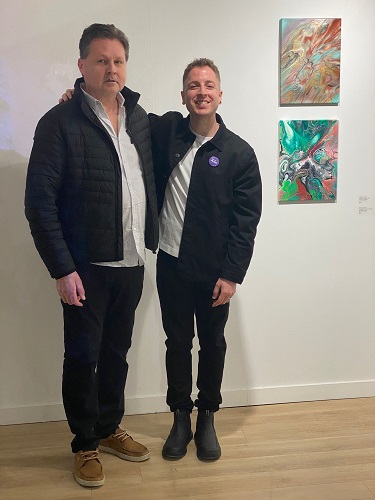
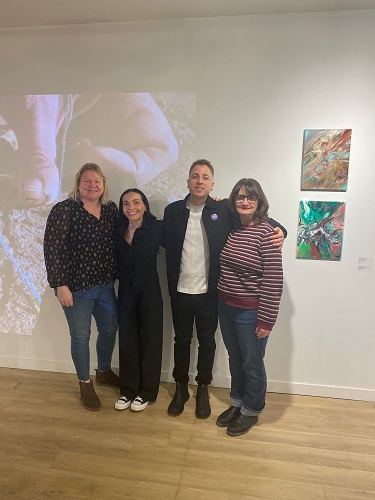
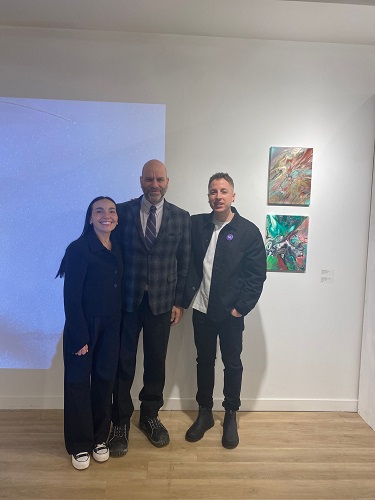
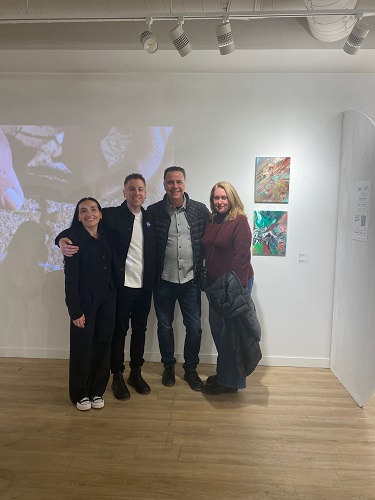
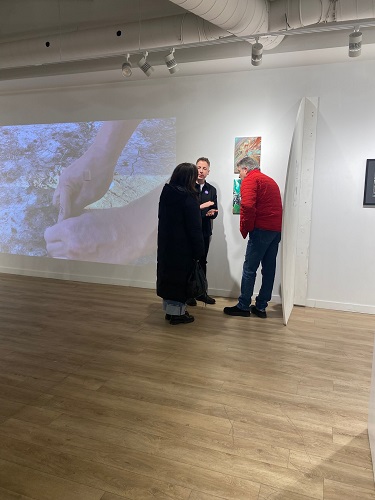
In the pic over the title, Alberto Galeotti – aka KinRossArt – at work in his studio at 222 Islington Avenue, Etobicoke; here below, a photogallery from the exhibition currently open at Cloverdale Common (Cloverdale Mall, 250 The East Mall, Etobicoke, Toronto), Wednesday through Saturday, 10 a.m.–5 p.m., until March 5th; at the bottom, a glimpse of the Apuan Alps, in Italy, with the Mediterranean Sea in the background (photo: Parco Apuane / Facebook)