
Stagnant pay and few benefits push 1 in 3 Canadians to seek new jobs in 2026
TORONTO – A growing number of professionals in Canada are considering a job change in 2026. According to new research from consulting and recruitment firm “Robert Half” (here), about one third of employed workers (33 per cent) plan to look for a new position in the first half of the year, up from 26 per cent recorded in the summer of 2025.
The survey, conducted between November and December among nearly 2,000 workers and job seekers, points to a return of optimism after a period marked by economic uncertainty and global tensions. According to experts, many professionals who postponed important decisions throughout 2025 are now feeling more confident about re-entering the job market.
Driving the desire for change are above all benefits and workplace perks, cited as the main motivation by 33 per cent of respondents. These are followed by competitive pay (31 per cent) and a lack of career advancement opportunities in their current roles (23 per cent). According to “Robert Half”, this is a clear sign of how flexibility, adequate salaries and career prospects have become central elements in career decisions.
“Many professionals chose not to make a job change throughout 2025, due to economic and global uncertainty, but signs of greater movement are showing as we enter 2026” said Koula Vasilopoulos, Senior Managing Director at “Robert Half”, Canada. “Workers are once again highlighting the value they place on perks and benefits like flexibility, competitive salaries, and career growth, and are feeling less inclined than they were this past year to remain with organizations that aren’t providing those essential elements.”
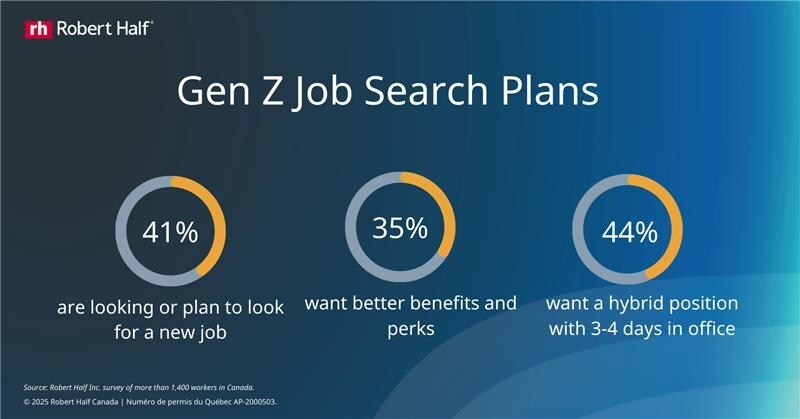
Leading this renewed momentum are technology professionals and Generation Z workers (those born roughly between the mid-1990s and the early 2010s). More than 40 per cent of individuals in these groups said they intend to look for a new job in the coming year. Despite transformations linked to artificial intelligence, the tech sector therefore continues to be one of the main drivers of change in the labour market.
Challenges remain, however. A parallel survey conducted by the same firm among a sample of 350 job seekers shows that more than six candidates out of ten expect their search to take longer than in the past. The main obstacles include intense competition for open positions, difficulty finding a work environment that aligns with personal expectations, challenges in showcasing skills, and increasingly lengthy hiring processes.
Experts at Robert Half advise candidates to prepare carefully: keeping skills up to date, refining their digital profiles and investing in networking are essential steps to stand out. At the same time, they stress the importance of carefully evaluating the opportunities offered by employers, to ensure that the next career move truly aligns with individual needs and goals.
In the graphic above, Gen Z Job Search Plans (CNW Group/Robert Half Canada Inc.)