World Urged Not to Forget Iran
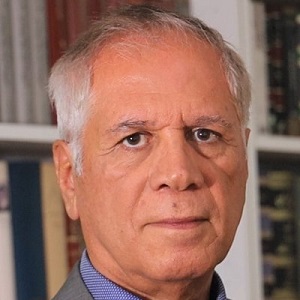
We publish an article on the current situation in Iran, written by Mohammad Tajdolati (in the pic above), Chairman of the National Ethnic Press and Media Council of Canada and Editor-in-Chief of www.persianmirror.ca
TORONTO – Before the eyes of the international community, one of the most severe crackdowns by a government against its own citizens is unfolding in Iran, according to reports emerging despite an almost total communications blackout. For more than two weeks, millions of Iranians have been living under what observers describe as deeply alarming conditions, as authorities have shut down internet access, telephone networks, and most channels of communication between Iran and the outside world.
The blackout, imposed abruptly on the evening of Thursday, January 8, severed contact not only between Iran and other countries but also among individuals inside the country. Human rights advocates say the move paved the way for one of the most violent suppressions in the 47-year history of the Islamic Republic.
The protests began on December 28, 2025, initially sparked by demonstrations among Tehran bazaar activists over sharp fluctuations in the value of the foreign exchange. What started as localized economic protests soon evolved into a nationwide movement. Within days, demonstrations spread to more than 100 cities across Iran, encompassing urban centers and smaller towns alike.
In the early stages, turnout in some smaller cities was limited. That changed rapidly as people from diverse social backgrounds and age groups joined the demonstrations. Protesters began chanting explicit slogans condemning authoritarian rule and directly criticizing Ali Khamenei, the Islamic Republic’s supreme leader. Clashes between protesters and security forces soon followed.
After several days of near-total silence, short video clips began to reach the outside world via very limited unit satellite phones linked to Starlink. The footage, shared by members of the Iranian diaspora, appears to show what activists describe as systematic and premeditated violence by state forces against unarmed demonstrators. In the videos, protesters can be seen facing war bullets as well as metal and plastic pellets fired at close range, often aimed at the head, face, and eyes.
Across the recordings, demonstrators are shown with empty hands, expressing their economic, political, and social demands solely through chants. Iranian officials, however, have accused protesters of terrorism and of acting on behalf of foreign powers. These accusations against protesters are intended to justify the acts of force by agents of the regime, which are crimes against humanity.
According to recent audio and video reports and accounts from travelers who have crossed into neighboring countries, the death toll between Friday, January 9, and Tuesday, January 13, is estimated to exceed 12,000. Independent verification remains extremely difficult due to the ongoing communications shutdown, which has prevented journalists and human rights groups from confirming the identities of victims or the full geographic scope of the violence.
Reports also indicate that thousands have been injured by both live and non-lethal ammunition. Many of the wounded are said to be avoiding hospitals for fear of arrest, instead seeking treatment from trusted medical professionals in private or undisclosed locations.
Families searching for missing relatives have reportedly crowded forensic medicine centers in scenes described as heartbreaking. Longstanding practices attributed to Iranian authorities have again been reported, including forcing families of slain protesters to pay for the bullets used to kill their loved ones—an act widely condemned as inhumane and a violation of international law.
As details of the crackdown have emerged, Iranian diaspora communities around the world have organized protests and rallies in major cities. Their aim is to amplify the voices of protesters inside Iran and to press governments, parliaments, and international institutions to take action.
Activists argue that citizens of democratic societies have a moral responsibility to respond. Millions of Iranians, both inside the country and abroad, are calling on United Nations member states to use international legal mechanisms to support Iran’s population against what they describe as one of the most ruthless governments of the modern era—one they say has repeatedly endangered regional and global stability over the past four decades.
In a sentiment often quoted by Iranians during times of crisis, the 13th-century poet Saadi wrote that:
All human beings are members of a single body,
created from the same essence,
when one member suffers,
the others cannot remain at peace.
Mohammad Tajdolati
(Chairman of the National Ethnic Press and Media Council
of Canada and Editor-in-Chief of www.persianmirror.ca)