
TORONTO – The wildfire emergency in Canada is not easing, despite falling temperatures and some rainfall that had raised hopes of relief, at least in some areas. According to real-time data from the Canadian Interagency Forest Fire Centre (CIFFC – here), at the time of writing this article there are 833 active wildfires across the country, including 163 still out of control, 509 out of control but being monitored, 120 under control, and 41 contained.
The fires are mainly concentrated in the Northwest Territories and in the provinces of British Columbia, Ontario, Quebec, and Manitoba.
The situation is particularly challenging in British Columbia, where more than 5,000 people were evacuated over the weekend, from the area of North Okanagan, while the number of active wildfires in the province reached 133, according to CIFFC data.
““We are currently in a complex and rapidly evolving emergency response here in B.C.” Kevin Dunbar, executive director of Emergency Response and Recovery Operations, told Global News. The situation has also been driven in recent days by particular weather conditions: starting Saturday, strong winds and lightning strikes swept across the province, triggering dozens of new fires that quickly expanded. More than 30 new wildfires were added over the weekend to the approximately 100 already burning in B.C., where nearly half of the active fires are now considered out of control.
Dunbar also explained that, with many wildfires still burning, it is not yet possible to determine how many structures have been damaged. “When it is safe to do so and when they’re able to, local authorities, local governments and First Nations will go in and do a damage assessment,” he said.
Cliff Miller of the BC Wildfire Service said drought conditions in southern British Columbia have reached record levels, creating “explosive” fire behaviour. As the province moves into August, the wildfire risk remains high.
Because the threat continues, Dunbar is urging people living in wildfire-risk communities to pre-register for emergency support services. He also recommended that residents create or update their emergency plans and prepare a grab-and-go bag for every member of the household, including pets. The bag should contain enough supplies to remain self-sufficient for at least 72 hours.
“We know that this is a very difficult and stressful time for those who’ve been evacuated,” Dunbar concluded.
Meanwhile, the emergency continues in Ontario, where dozens of wildfires remain active and 30 are still considered out of control. In addition, eight new fires were confirmed Sunday evening in the region, particularly around Thunder Bay and Nipigon.
Approximately 1,876 people in northwestern Ontario are currently evacuated due to wildfires, according to a spokesperson for Ontario’s Ministry of Emergency Preparedness and Response, as of Friday afternoon.
Overall, 14 communities have been evacuated, while six have been able to return home.
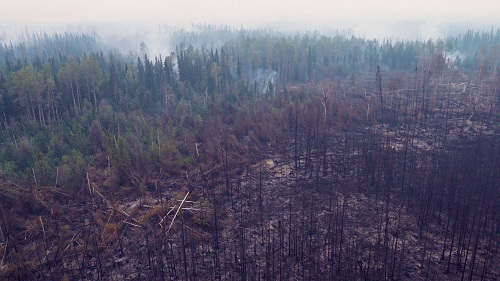
In the pic above, a forest devastated by a wildfire in British Columbia (photo: Facebook page of BC Wildfire Service)