
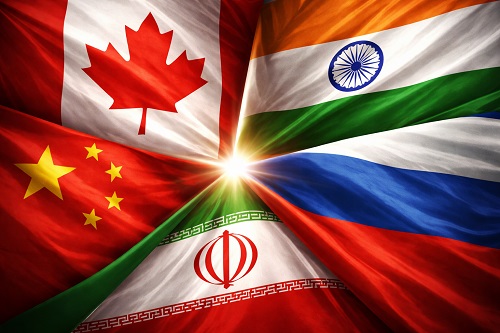
OTTAWA – Some foreign governments continue to “harass” and “intimidate” Canadians, but proving it in court is a difficult challenge, the federal police, RCMP, explained, confirming to Global News (here the article) that they are aware of reports of intimidation and harassment against certain communities across Canada and that foreign states are involved in similar activities. However, the RCMP also says that linking specific incidents to a foreign government with evidence usable in court is difficult.
Transnational repression occurs when foreign governments, or actors working on their behalf, use threats and violence to “silence” opposition abroad. The Canadian Security Intelligence Service (CSIS) has identified China, India, Russia, and Iran as the main states involved in foreign interference in Canada. Authorities believe that the Indian government, in particular, has targeted the “Khalistan” movement, which seeks independence for the Sikh-majority Punjab, labeling activists as terrorists and seeking their persecution or extradition.
In 2023 and 2024, India is reported to have intensified this strategy, even planning violence against Sikh leaders in Canada: six Indian diplomats were expelled for suspected involvement in these acts. The RCMP is still investigating and does not disclose further details, but it reiterates its commitment to combat all forms of foreign interference, protecting various diaspora communities from intimidation and threats. Canadian Sikh leaders have accused the government of downplaying India’s activities — at a time when Canada is seeking to establish new trade relations with India (which had previously been interrupted due to the allegations), as well as with China — highlighting that community members continue to face intimidation.
The dilemma—and the question no one here dares to ask—is: should Canada prioritize safeguarding its international interests or protecting the specific interests of the communities it hosts, even at the expense of its own?