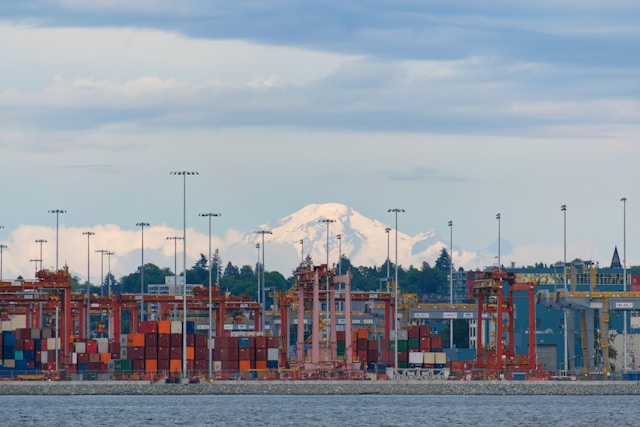
TORONTO – “Chemical precursors”, meaning the ingredients used to produce fentanyl, the extremely powerful synthetic drug responsible for numerous overdoses, are reportedly entering Canada through the Port of Vancouver before being sent to drug laboratories run by criminal cartels. The claim was made in Washington by the Director of the Drug Enforcement Administration (DEA), Terrance Cole, during a hearing before the U.S. Senate.
According to Cole, U.S. authorities are “very conscious” of fentanyl production in Canada intended for export to the United States. Over the past two months, he added, “significant seizures” of narcotics have been recorded on Canadian territory.
During the Senate Budget Committee hearing, as reported by CBC, the head of the DEA stressed that U.S. law enforcement attention is not focused only on the southern border with Mexico, the traditional hub of drug trafficking, but also on the northern border.
“We need to make sure that we keep an eye on the northern border as well. We see more precursors coming into the Port of Vancouver, coming into Canada,” Cole said, explaining that Canadian traffickers would then move these chemical substances across the country for fentanyl production, also in collaboration with Mexican cartels.
The issue has, as is well known, created high tensions between Ottawa and Washington: fentanyl trafficking from Canada has been one of the central issues in criticism by U.S. President Donald Trump, who has cited it as one of the reasons for imposing tariffs on Canadian goods.
However, according to data from U.S. Customs and Border Protection, the reality appears quite different: the volume of fentanyl seized at the northern border – as also reported by CBC – remains far lower than that recorded at the southern border with Mexico. In 2025, 35 kilograms were seized in the north compared with over 5,200 kilograms in the south. In the first half of 2026, the gap appears even wider, with around 2.7 kilograms intercepted at the Canadian border versus more than 2,600 at the Mexican border.
Cole’s statements prompted an inevitable response from Canadian authorities. The Vancouver Fraser Port Authority stressed its cooperation with local police, the Royal Canadian Mounted Police (RCMP), the Canada Border Services Agency (CBSA), and port operators to ensure the security of goods in transit: “We routinely co-ordinate security efforts with multiple law enforcement and regulatory agencies” a port authority spokesperson said to the CBC and the CBSA reiterated that “Canada is not a significant source of fentanyl, be it for the U.S. or abroad,” and highlighted the federal government’s commitment to strengthening border controls, including through the hiring of new officers.
For its part, the U.S. DEA, which currently has two offices in Canada in Ottawa and Vancouver, announced plans to open two more by 2027, underscoring growing concern over the northern front of drug trafficking.
Photo by Anastasiya Dalenka on Unsplash