
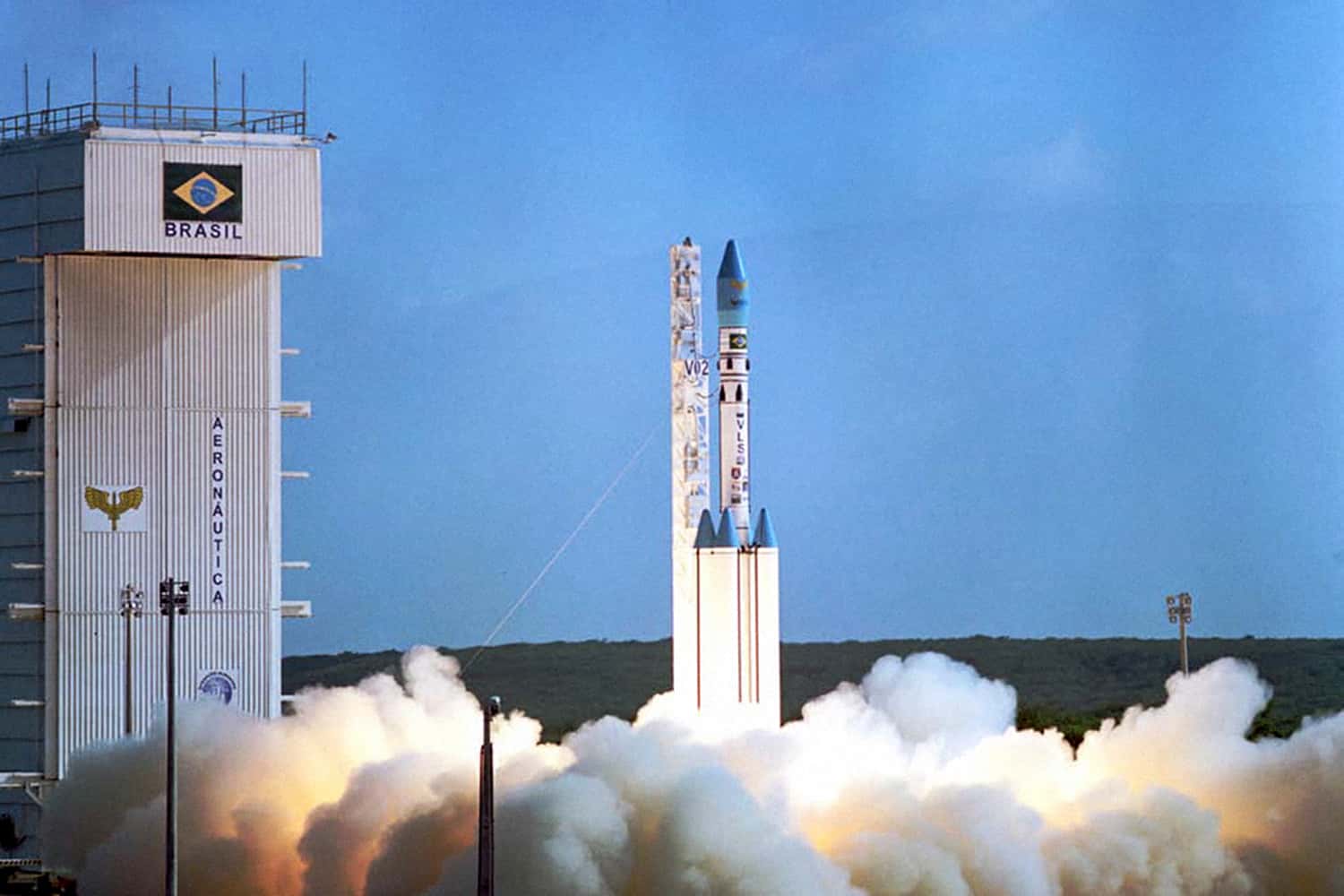
The commander of the Brazilian Air Force, Carlos Alberto Batista Júnio, announced that the Canadian C6 Launch Systems joins the pool of companies that work in the construction of satellites and rockets at the Alcántara space center, in Brazil.
The commercial exploitation of the Center will be fundamental for the development of the Brazilian Space Program and the insertion of the country in the global market, said Batista Júnio. According to the Ministry of Science, Technology and Innovations, the space market as a whole currently moves around US $ 360 billion dollars annually. The expectation is that, with the agreement, Brazil can attract 1% of the business volume in the space area.
C6 Launch Systems is a Canadian-based space technology company developing a dedicated small satellite launch capability to place payloads “on-demand” for small payloads such as nano and CubeSats, up to 30 kg in a solar synchronous orbit ( SSW) nominal 600 km.
In addition to C6 Launch Systems, three United States companies (Hyperion, Orion Ast and Virgin Orbit) will participate through a public-private partnership model in the mission of turning President Jair Bolsonaro’s Brazil into the new pole for the launch of satellites.
The Alcántara Launch Center (Centro de Lançamento de Alcântara, in Portuguese), located in the homonymous municipality of the state of Maranhão, is a Brazilian space base managed by the Brazilian air force together with the Brazilian Space Agency.
Alcántara, together with the Kourou spaceport, in French Guiana and belonging to France, is the only space base in Latin America. One of the great advantages of the Brazilian base is its geographical position, at latitude 2 ° 18 ‘south, close to the equator, which allows a saving of about 30 percent in fuel compared to launches made from Cape Canaveral.
The key to this agreement is that it offers the necessary guarantees for the preservation of American technology, which is used by the vast majority of companies dedicated to launching satellites.
The Alcantara base, inaugurated in 1983, for years represented the Brazilian hope in the space race; however, it was abruptly discontinued in August 2003.
That day, the explosion of a rocket shortly before its launch cost the lives of 21 engineers who were working on its assembly at the space base and the purely Brazilian program was virtually abandoned.
After the accident, only a few suborbital rockets have been launched from Alcántara, but now the Bolsonaro government wants the base to have the capacity to send projectiles and satellites into space.
By Silvia Méndez