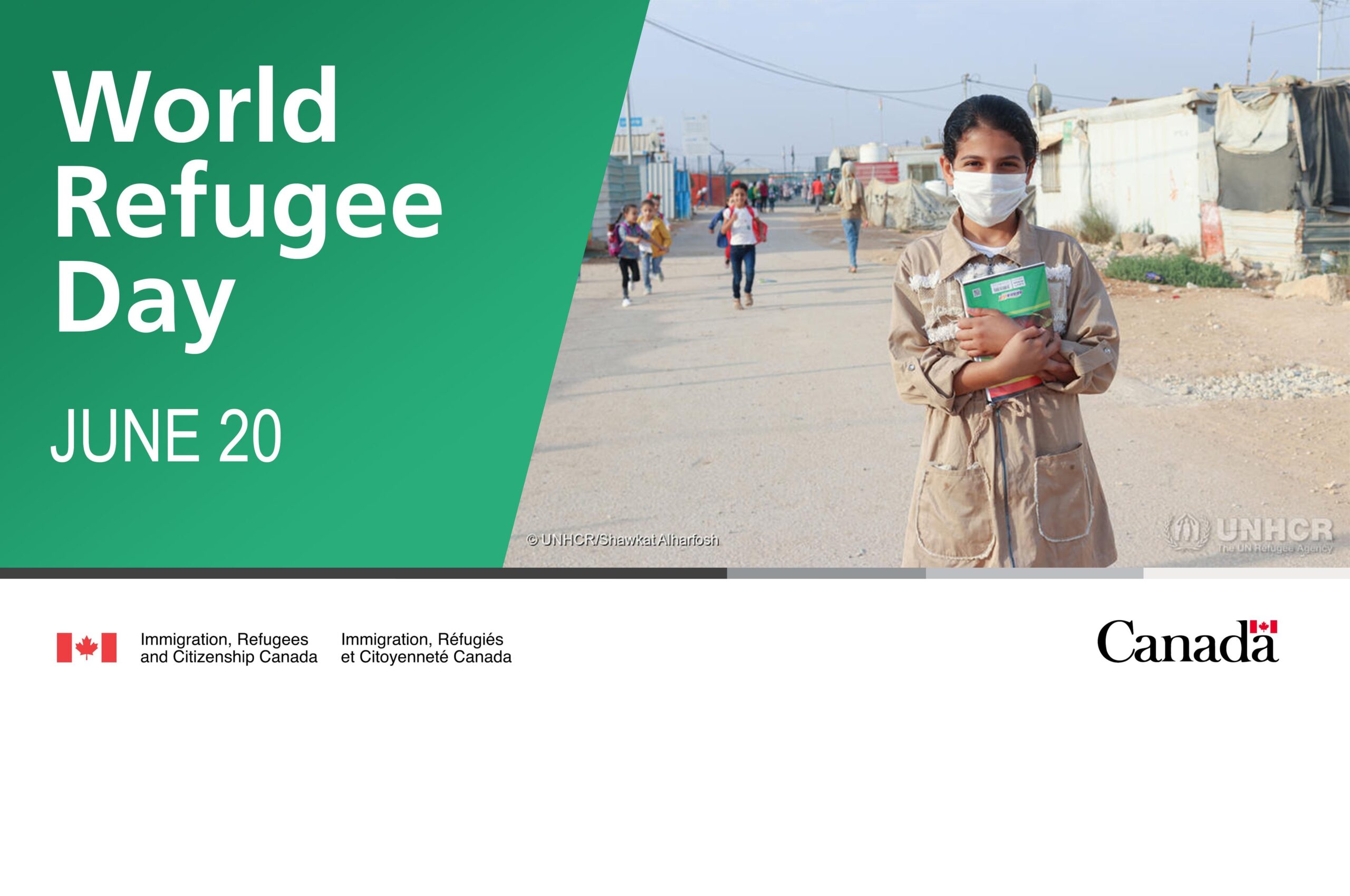
Migrants and non-governmental organizations ask Ottawa to allow family unification and offer full immigration status on 20th June, Father’s Day, which coincides with World Refugee Day. The Migrant Rights Network criticized in a statement the federal government’s initiatives aimed at supporting a greater flow of refugees to Canada, assuring that the policies of Marco Mendicino, Minister of Immigration, Citizenship and Refugee fell “incredibly short.”
For his part, Mendicino said in another statement that Canada welcomed nearly half of all resettled refugees worldwide in 2020, noting that even the International Organization for Migration and the United Nations High Commissioner for Migration Refugees (UNHCR) recently called Canada “a bright light in a terrible year for refugee resettlement.”
“Throughout the pandemic, Canada was one of the few countries that never stopped receiving refugees who urgently required our help,” Mendicino said, adding: “While others closed their doors, ours have remained open.”
Non-gubernamental organizations question the commitment to refugees
In the framework of Refugee Day, Prime Minister Justin Trudeau said that Canada has a proud humanitarian tradition of protecting the world’s most vulnerable people. “Today, we continue to open our borders and our hearts to those who seek safety and refuge from persecution and violence,” he said.
“Existing roads and new temporary programs recently announced by the government continue to deny permanent status to most migrants, particularly undocumented residents,” said Sarom Rho, organizer of the Migrant Workers Alliance for Change in Toronto.
“Despite talking about being a welcoming country and wanting to improve the rights of migrant workers, Canada only accepted 25,000 refugees in 2020, a 50 percent reduction from the previous year,” added Rho.
A spokesperson for Mendicino’s office refuted this, saying that global migration has been disrupted by the pandemic, forcing the country’s resettlement system to operate at reduced capacity.
Las travel restrictions, difficulties in obtaining documents and medical checks and temporary closures international partners, including UNHCR, have also significantly slowed the process of receiving refugees, said Mendicino office.
Despite this, Canada still has one of the highest numbers of any country in the world when it comes to refugee resettlement. Last week, the federal government unveiled three new measures to welcome more refugees to Canada, including a private sponsorship program and an increase by 2021 in the number of protected people from 23,500 to 45,000.
Mendicino described the initiative as a success, because “the idea is to recognize the talents and abilities of refugees by welcoming them through flows of economic immigration; This not only allows Canada to welcome more refugees, but it also changes the stereotype of refugees as sole victims by showing all that they contribute to our country.”
But according to the rights of migrants from Canada, the initiatives are not enough. And the fact is that the quota of protected persons has increased for this year, but the current backlog is 68,300, while most of the refugees cannot present applications, “adds the Migrant Rights Network in its statement.
Avoiding irregular entry
While Canada prepares to accept more refugees, Ottawa has tried to prevent asylum seekers from entering the country through its land border, either through its Safe Third Country Agreement (STCA). with the United States or through a Covid-19 policy that is being challenged in court.
This would affect people crossing irregularly, such as on Roxham Road in Quebec, a common destination for applicants for asylum that avoid the STCA
Photo: IRCC