TORONTO – Canada continues to burn. It’s a veritable summer in flames for the entire country, grappling with hundreds of wildfires, air quality compromised by smoke, and a sweltering heat that seems never-ending.
In recent days, Atlantic provinces have joined the already besieged by fires (such as Ontario, Manitoba, Saskatchewan, Alberta, Yukon, and British Columbia): in New Brunswick, according to the Wildland Fire Reporting System, 12 fires are active today, and two of them are classified as out of control: Old Field in Miramichi and 115 Pit in Irishtown, outside Moncton. Nine fires are classified as “being patrolled,” while one is classified as “contained”. The New Brunswick Emergency Measures Organization stated on the social media platform X (Twitter) that people in the Irishtown, Tankville, Evangeline and Lakeville areas should be prepared to evacuate at short notice, as the fires pose a “potential threat to people and property” and the forecast is not encouraging: no rain is expected for at least another week and temperatures will reach 35°C.
Things are no better in Newfoundland and Labrador, where the province’s largest uncontrolled wildfire continues to gain ground, fueled by dry and windy conditions: it’s the Kingston fire, for which approximately 3,000 people (1,500 families) were placed on evacuation alert over the weekend. There are seven uncontrolled wildfires in the province: five in Newfoundland and two in Labrador.
Meanwhile, in Ontario, firefighters are battling a wildfire in the community of Kawartha Lakes, about an hour and a half north of Toronto. And other areas across the province remain at high risk, due to the recent heat wave that doesn’t appear likely to end for a couple of days (at least).
Air quality continues to be affected: today, the risk level is “4,” meaning moderate, throughout the day (here the real time updating). This level, however, requires a certain amount of attention and caution, especially for the elderly or those with certain medical conditions.
According to the Canadian Interagency Forest Fire Centre (CIFFC: here the real time updating), there are currently more than 700 active wildfires raging across the country. All provinces are affected, with only Prince Edward Island remaining untouched.
Mike Flannigan, a wildfire expert at Thompson Rivers University in Kamloops, says Canada’s wildfire season is the second worst on record, after 2023. As CTV reports (here), Flannigan has been calling for years for the creation of a national wildfire agency that would work with local agencies to manage the country’s surge in wildfires. He says this initiative differs from the one called for by the Canadian Association of Chiefs of Fire Services, in that a national agency would quickly deploy necessary resources across the country, wherever needed. “There’s just too many fires. There’s not enough resources. We call on help from around the world and some of the Canadian Armed Forces, but we should be able to handle this on our own” he said to CTV, adding that fire management is the responsibility of provinces and territories, and each jurisdiction can share resources, but sometimes those resources don’t get there in time. “Let’s say Alberta is on fire and Quebec sends firefighters or helicopters” he said. “It takes three days for that firefighter to get in that line…”.
In Newfoundland, resources from New Brunswick, Quebec, and Ontario are helping fight the fires, but some of the crucial resources they’re waiting on are being delayed.
In a statement to CTV, the Ministry of Emergency Management and Community Resilience said: “While elements of the current wildfire management system work well—such as the Canadian Interagency Forest Fire Centre, which plays a critical role in coordinating resources and expertise between provinces and territories—we recognize the growing challenges posed by wildfires and the need to strengthen our response. Work is already underway to identify and advance options to improve Canada’s wildfire response capacity, including better coordination across jurisdictions and building long-term resilience…”.
“That sounds great” replied Flannigan. “But let’s do it. We’ve been talking about this for years. It’s time for some action and less talk…”.
And it would be time.
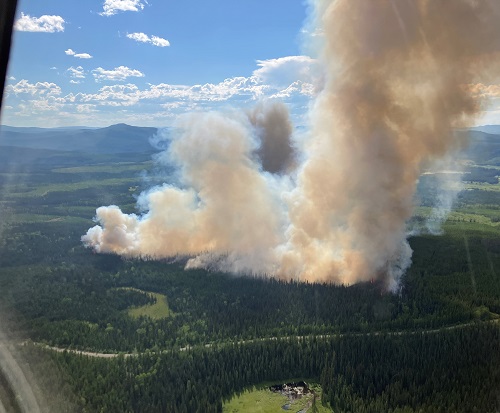
In the pic above, a wildfire in British Columbia (from Twitter X – @BCGovFireInfo)