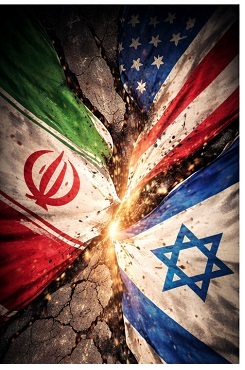
TORONTO – The 39-day war between the world’s largest military and the strongest army in the Middle East, allied against the Islamic Republic, has now reached a pivotal point. The recent announcement of a two-week ceasefire—though fragile—signals a likely end to open hostilities and marks a critical turning point for the region.
At a broad and quick glance, this war has had its “winners” and “losers.”
Israel emerges as the first winner. Its most significant achievement from this 39-day war is the comprehensive weakening of Iran’s position in the region, which aligns with its long-term strategic objectives.
The second winner is the IRGC and the surviving parts of the Islamic Republic. Despite many senior IRGC commanders being killed early in the war, a faction led by Ghalibaf(head of the parliament), Vahidi(new chief commander of the IRGC), and others now controls the power structure and leads negotiations during the ceasefire.
The United States is among the main losers. Despite achieving military successes proportional to its capabilities, it has experienced political setbacks during this conflict.
Trump’s propaganda and posturing failed. He did not expect the widespread political and economic fallout from the Islamic Republic’s resistance, both domestically and internationally.
Trump has not solved the nuclear issue or accounted for 400 kilograms of enriched uranium. He has not met goals for Iran’s missile program or proxy forces and has created new challenges at the Strait of Hormuz.
Trump now faces a domestic crisis from entering the war and rising concerns about the November midterm elections.
The biggest losers are the Iranian people. Millions, inside and outside Iran, who thought a U.S.-Israel war might end 47 years of suffering, are now dealing with January’s massacre and remain disillusioned and exhausted, facing a vengeful regime.
The ceasefire stops the bombs and allows Iranians to assess war damages, but millions still fear a harsher, more militarized government.
The most immediate concern is the onset of widespread executions of thousands of political prisoners and regime opponents. The head of the judiciary of the Islamic Republic officially ordered, on Tuesday, the acceleration of death sentences for opponents. Each day, several prisoners’ names are announced. The same regime carried out mass executions in the 1980s, following the ceasefire of the eight-year war with Iraq and what it called “drinking the poisoned chalice.”
The core lesson from this 39-day war for all Iranians who oppose the current regime is the necessity of solidarity, cooperation, and practical planning. To break free from the Islamic Republic, actions must move beyond slogans and wishful thinking and focus on collective, pragmatic strategies.
Mohammad Tajdolati
Editor-in-Chief of PersianMirror.ca