OTTAWA – As Parliament returns on May 26, Canadians selected twelve Indigenous candidates to represent them in the House of Commons. This is an all-time high in Canadian history and a historic achievement.
Why is this historic? In 1876 with the passage of the Indian Act, law makers of the day felt that First Nations peoples lacked the ability to make responsible decisions. The Federal Government felt that its role was to function as guardians of First Nations until they could be assimilated. As a result, First Nations did not have the right to vote federally until 1960. Until 1960 First Nations had to give up their Indian status to gain the right to vote in federal elections.
During the first and second World Wars, First Nations men and women who served in the military gained the right to vote in federal elections without giving up their Indian status. However, when the wars ended those veterans who returned to their communities and lived on reserve lost the right to vote.
It was only in 1948 that a Parliamentary Committee studying the Indian Act recommended that First Nations have the right to vote in federal elections without restrictions. The ensuing process did not achieve its goal until 1960, when Prime Minister John Diefenbaker extended the right to vote to First Nations. In 1982, voting rights for all Canadians were enshrined in the Canadian Charter of Rights and Freedoms.
Amongst First Nations voters, the views about exercising the vote are mixed. Some see it as going against the principles of their own historic forms of government, while others see it as an important asset to secure participation in a democracy. For those, it is vital in ensuring that issues important to them get addressed in the national agenda.
There have been other Indigenous MPs, however, it can be argued that this cohort of twelve elected Indigenous Members of Parliament is truly a historic dozen. And, they are present in all major Parties.
Five Liberal members include veteran MP Jamie Battiste, the first Mi’kmaw, from Cape Breton-Canso-Antigonish. He briefly considered seeking the Leadership of the Liberal party); Mandy Gull-Masty, from Abitibi-Baie-James-Nunavik-Eeyou, is the former [first female] Grand Chief of the Cree Nation Government; Buckley Belanger a Metis representing Desnethe-Missinippi-Churchill River; Wade Grant, a Musqueam elected in Vancouver-Quadra; and Rebecca Chartrand a Metis leader elected from Churchill-Keewatinook Aski.
Four Conservative members include Billy Morin, former Chief of the Enoch Cree Nation, elected in Edmonton Northwest; Ellis Ross, former Haisla Chief representing the Skeena-Bulkley Valley; Adam Chambers a Metis representing Simcoe North; and Marc Dalton another Metis to represent Pitt Meadows-Maple Ridge.
Two New Democrat Party MPs number among them Leah Gazan from the Wood Mountain Lakota Nation re-elected in Winnipeg Centre; and, Lori Idlout, an Inuk re-elected from Nunavut.
Lastly, one member in the Bloc Quebecois, Pierre Savard-Tremblay, from the Huron Wendat First Nation was elected to represent Saint-Hyacinthe-Bagot-Acton.
It is a long way from 1876, but this cadre of indigenous MPs will have an opportunity to test and help evolve the Canadian Parliament and its institutions.
Article by Maryantonett Flumian
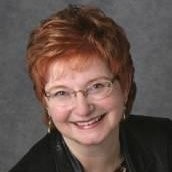
Maryantonett Flumian (in the pic above) is the former first president of Service Canada; former Deputy Minister under Minister Volpe, the first Deputy Minister of Italian origin, and hailing from St. Clare Elementary in Dufferin and St. Clair in Toronto. She has been a consultant for First Nations for over fifteen years