
OKANAGAN VALLEY — For some of the residents evacuated in recent weeks because of wildfires in British Columbia, the return-home phase has begun. But in reality, this marks a new stage of the emergency: for many families, there is no longer a home to return to.
On Saturday morning, August 15, authorities began downgrading some evacuation orders to alerts in the areas around Clinton. The change mainly affects areas north and east of the community, along Highway 97 and beyond 70 Mile House. Evacuation orders remain in effect west of the town, where the Pear Lake wildfire continues to pose a threat.
A return to normal is still a long way off. Authorities have warned that Clinton is a community deeply affected by the wildfires and that some of the services residents would normally rely on remain limited or unavailable.
A similar situation is unfolding in Summerland and Peachland, on the shores of Okanagan Lake, where evacuation orders are slowly beginning to be lifted about a week after the Bald Range wildfire erupted, forcing more than 20,000 people to leave their homes.
For those who are able to return, however, the experience is anything but normal. Some homes and properties are still without power, while Summerland remains under a boil-water advisory and water restrictions are in place. Authorities have also urged returning residents to be aware of bears in the area and to properly dispose of spoiled food left behind during the evacuation.
Re-entry guidelines recommend that residents bring flashlights, cleaning supplies and first-aid kits, as well as a camera to document the condition of their properties for insurance purposes — another ordeal residents will now have to face as they navigate the insurance claims process.
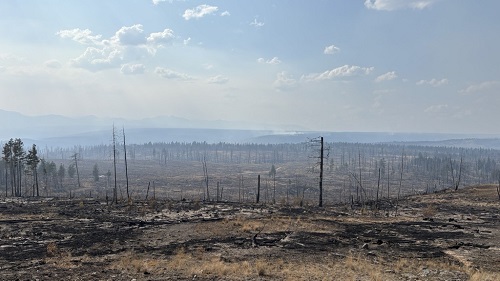
Then there is the shock of returning to a landscape that has been profoundly transformed: blackened trees, ash, smoke in the air and familiar landmarks that have disappeared.
For some evacuees, the situation is even more devastating: the flames have destroyed their homes, leaving them with nowhere to return to. In these cases, going back home means assessing the damage, salvaging whatever remains and beginning to think about rebuilding.
The wildfire season in British Columbia has so far been marked by devastating fires that have destroyed hundreds of homes and other structures, particularly on the Okanagan Indian Band reserve, where homes were lost in the Bradley Creek wildfire.
At the time of writing, according to real-time data from the BC Wildfire Service (here), there are 127 active wildfires in the province, 44 of them classified as out of control.
Thousands of people remain away from their homes because the wildfire threat persists. And even for those who have been allowed to return, the emergency is far from over. If anything, a new and equally difficult phase is now beginning: assessing the damage and rebuilding what has been lost.
In the pic above: overlooking previous Rim Lake fire towards Pear Lake wildfire, August 13 (photo: BC Wildfire Service)