VICTORIA – As flames continue to advance, consuming forests and homes and forcing residents to flee, British Columbia has recorded the first fatality of this dramatic wildfire season: an 80-year-old woman from Meadow Valley died while trying to leave her home with a family member to escape the flames of the Summerland wildfire, the now-infamous “Bald Range,” named after the mountainous area west of Summerland where it broke out.
The news was confirmed by the Penticton RCMP, which said that “BC Coroners Service is conducting an investigation to confirm the nature of the woman’s death. No additional details can be released” but Police, however, added that “believe her death to be a result of the wildfire.”
“This wildfire has been a deeply traumatic event for all those in the region. Our thoughts are with this family, who are now grappling with the loss of their loved one,” says Superintendent Beth McAndie, Officer in charge of the Penticton South Okanagan Similkameen Regional RCMP Detachment. “Officers are working closely and providing full supports to the impacted family, who are asking for privacy at this time.”
(here RCMP’s new release)
The BC RCMP continues to monitor the wildfire situation across the province, adjusting and deploying police resources as needed, as the crisis continues to escalate. The number of evacuees has now well surpassed 20,000, while another 10,000 or so people remain under evacuation alert and must be prepared to leave their homes at a moment’s notice.
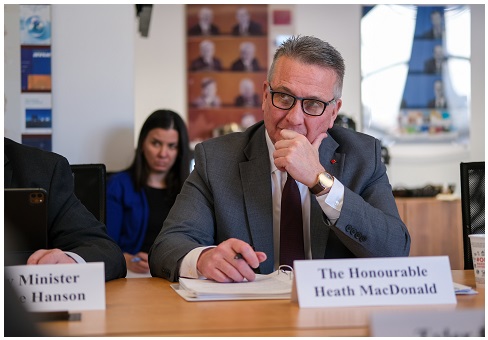
Against this backdrop, and following the state of emergency declared on Saturday by B.C. Premier David Eby, the Canadian federal government announced an urgent assistance package for the province on Sunday. “I approved a request for federal assistance from British Columbia to provide shelter and accommodation to people who have been forced to leave their homes due to the wildfires ravaging the province, particularly those in the Summerland and Peachland regions,” Canada’s Minister of Emergency Management and Community Resilience, Eleanor Olszewski, wrote on social media on Sunday. “I have directed federal officials, under the leadership of Public Safety Canada’s Government Operations Centre, to work with the province to ensure that aid reaches those who need it most,” she added. “The federal government is here to support British Columbia and all residents of the province affected by this summer’s wildfires, for as long as it takes.” Olszewski also thanked “the firefighters, first responders and volunteers working tirelessly to keep people safe.”
According to real-time data from the BC Wildfire Service (here), at the time of writing there were 105 active wildfires across British Columbia, 46 of them classified as out of control. Still far too many. One of the reasons this wildfire season has been particularly challenging, according to Cliff Chapman, director of provincial operations for the BC Wildfire Service, is the weather. The intense heat and prolonged drought that have gripped the province this summer have created “explosive” fire conditions unlike anything seen before.
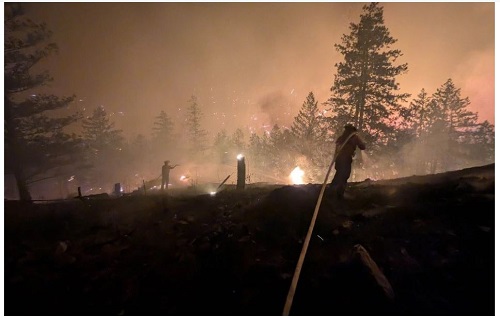
These exceptional conditions have not only contributed to the outbreak of new fires, but have also helped them spread at extraordinary speed. The “Bald Range” fire, which grew to 100 square kilometres within just a few hours, is a striking example. It shows how wildfires can now continue to spread rapidly even through the night — something that in the past was less common, when falling nighttime temperatures and less severe drought conditions helped slow the flames. That is why B.C. firefighting authorities have begun battling wildfires around the clock, including after dark. Because the fight is no longer just against the flames. It is also a race against time.
In the pic above, B.C. Wildfire Service do overnight suppression on the “Bald Range” fire near Summerland on Friday, Aug. 7, 2026 (photo by B.C. Wildfire Service)