
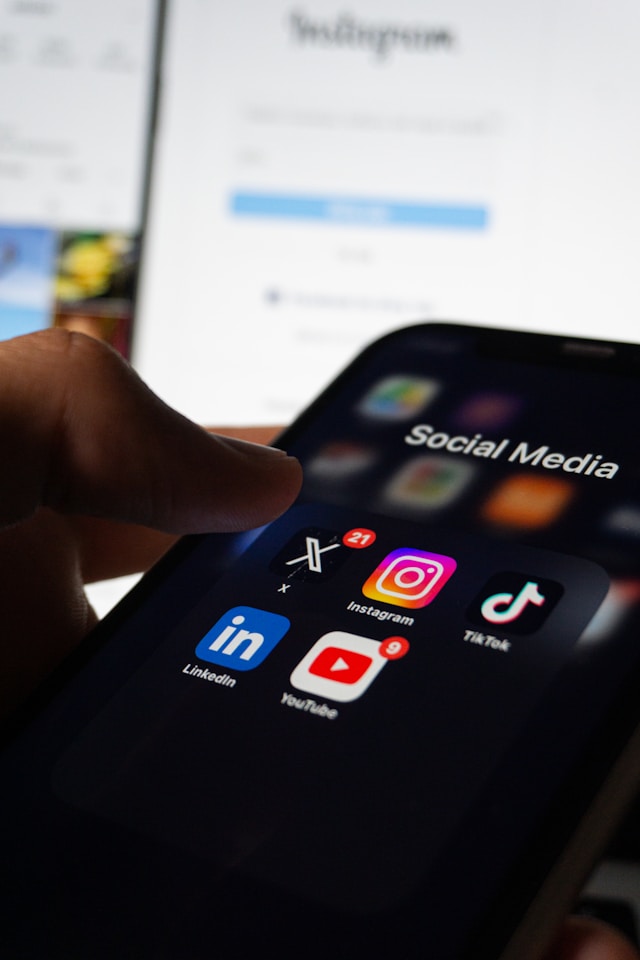
TORONTO – It is now well established that the (over)use of social media and the internet in general is harmful to very young people: anxiety and depression, cyberbullying, dangerous online interactions… the risks are numerous and varied. But is banning their use for minors (or at least for younger teens) really the solution? No, according to some academics from McGill University and the University of Toronto who, in a report published by CityNews (toronto.citynews.ca), express concern over the Liberal Party’s proposal to ban the use of social media and artificial intelligence for those under 16.
Recently, federal Liberals passed a non-binding resolution to set a minimum age for young people creating social media accounts and using AI chatbots, with the aim of protecting minors from harmful content and improving their mental health. The resolution requires social media platforms to enforce age verification, remove harmful content, and prevent unsafe online interactions. It is an initiative similar to that of Australia, which has recently introduced an age limit for social media use.
Vincent Paquin, an assistant professor of Psychology at McGill University, argues that young people should be exposed to social media rather than completely excluded from it. According to him, a total ban would not prevent them from using it, but would instead push them to do so in secret, making it more difficult for adults, parents, and teachers to intervene when problems arise. “It’s better to let young people be gradually exposed to the technologies and help them develop critical thinking and the necessary tools to have a safe engagement with the technologies,” Paquin told CityNews. Rather than a ban, he believes that better education on the use of digital platforms is needed, along with clearer guidelines for major tech companies such as TikTok and Meta, which should redesign their platforms to provide a less addictive and more balanced experience—avoiding, for example, so-called “doomscrolling,” or the endless scrolling of content that can lead to anxiety and addiction.
But social media is not the only concern. The use of artificial intelligence can also have negative consequences, which is why the Liberal proposal suggests banning AI chatbots such as ChatGPT. “These technologies have been shown to limit desire for interaction with peers, pushed some young people into sexual conversations, and have even recommended suicide to vulnerable youth,” the Liberal resolution states. In this case, Professor Paquin worries that children and adolescents could become dependent on AI for psychological support, with the risk of receiving inappropriate responses. “AI chatbots cannot replace a professional, a mental health professional, and cannot replace a human friendship or companionship,” he said.
Another expert, Tovi Grossman, an associate professor in the Department of Computer Science at the University of Toronto, agrees on the need to protect minors from risks related to chatbots. However, he warns that a ban could lead to a lack of education on how to use AI among children and younger students. In his view, AI could become a valuable educational tool in secondary education—but it needs to be used properly. How? Grossman suggests an approach similar to movie ratings: educating young people on AI use while introducing rating systems and safeguards. “You don’t ban kids from watching movies, but you create rating systems,” Professor Grossman told CityNews.
For experts, therefore, the solution is not prohibition, but education on how to use these tools—which, like it or not, represent the new way young people (and not only them) communicate and access information.