
SUMMERLAND, British Columbia – As wildfires continue to ravage British Columbia, the “side effects” of the blazes are beginning to emerge. The fires have not only destroyed forests and homes, forcing thousands of people to flee — one of whom died while trying to escape the flames. The consequences are far-reaching and are not always directly linked to the destructive power of the fires. Smoke alone can cause serious damage, and not only to air quality.
“Nobody wants smoke-tainted wine,” Ron Kubek, owner of Lightning Rock Winery in the Okanagan Valley, one of Canada’s main wine-producing regions and a popular tourist destination known for its orchards and lakes, told Reuters (here).
Kubek already knows that this year’s crop of Pinot Noir and other grapes is now unusable because weeks of wildfire smoke have caused what is known as “smoke taint” — a smoky smell and taste that penetrates the grapes, making them unsuitable for winemaking. Kubek’s grapes are not only unusable, but will still have to be harvested and disposed of so that the vines can produce a new crop next year. His winery will therefore have to bear the costs of an unproductive harvest, while also losing out on sales of more than 5,000 cases of wine over the coming years.
The winemaker was also forced to close his tasting room and seek refuge in a safe area. He is trying to stay in touch with employees, friends and associates who have also been evacuated after the fires destroyed their homes.
In short, it is a disaster.
“When you’re looking at a bottle of foreign wine on the shelf, buy a bottle of Okanagan wine instead. That’s what we need,” Kubek told Reuters.
Similar situations are unfolding across the valley, right in the middle of the summer tourist season, and for fruit growers the crisis is even more immediate: the crops are still hanging on the trees and cannot be harvested. Kubek told Reuters that his neighbour’s peach orchard was only 20% harvested when an evacuation order was issued, leaving more than C$300,000 worth of fruit to spoil.
The lush Okanagan Valley is also a summer grazing destination for livestock. British Columbia Agriculture and Food Minister Lana Popham said on Tuesday that 50,000 animals are in areas subject to evacuation orders. Ranchers across the province are helping one another evacuate and save livestock, particularly herds of cattle, calves and horses.
Meanwhile, the wildfires continue to rage despite reinforcements arriving from around the world, including Australia, New Zealand, Mexico and, as of today, Costa Rica. More than 100 wildfires remain active in B.C., with nearly half considered out of control, as reported by BC Wildfire Service (here the updating in real time). Across Canada, 602 fires are still active, 111 of them out of control, according to the Canadian Interagency Forest Fire Centre (CIFFC – here). So far, 4.1 million hectares have burned.
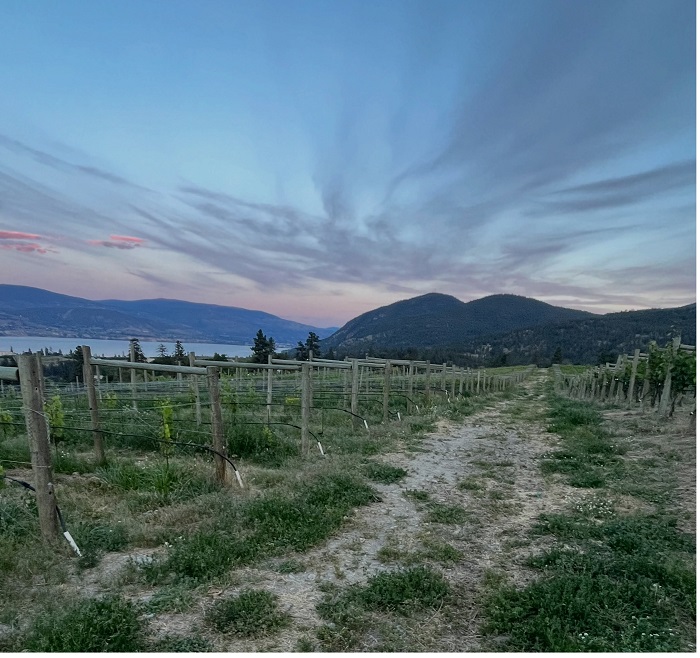
At the top of the article: a photo of Lightning Rock Winery, which was closed due to evacuations. The image was posted yesterday by Ron Kubek on his winery’s Facebook page