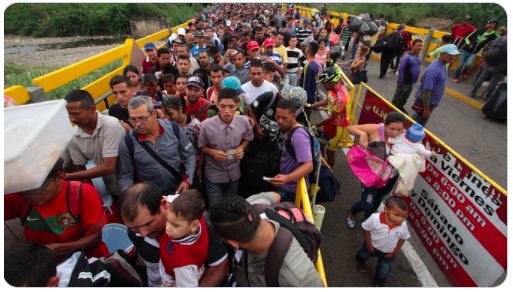
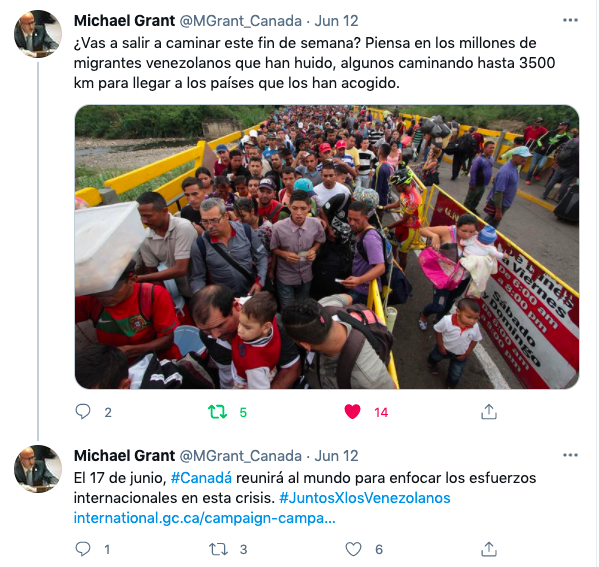
Canada and the world have a moral responsibility with the Venezuelan exodus, assured Michael Grant , Canadian Deputy Deputy Minister for the Americas. In a statement, Grant added that “the refugee crisis in Venezuela is the largest the Western Hemisphere has seen and, together with Syria, the second largest in the world.”
Despite the border closure caused by Covid-19, thousands of vulnerable people and especially affected by the health and socioeconomic crisis leave Venezuela every day. These migrants and refugees urgently need greater support from the international community, assures the UN Refugee Agency (UNHCR), ahead of a meeting that will take place in Ottawa this Thursday, June 17.
According to Grant, Canada will host the International Conference of Donors in Solidarity with Venezuelan Refugees and Migrants “which seeks to highlight both the efforts made to date by host countries and draw up a common plan with the international community to mobilize additional resources”.
The event will have the collaboration of UNHCR and the International Organization for Migration (IOM), co-leaders of the Regional Platform for Inter-institutional Coordination for Refugees and Migrants from Venezuela (R4V).
Donors, recipient countries, international organizations, international financial institutions, the private sector and civil society will also participate in the Conference, and it plans to “reach out to the voices of populations affected by the crisis”.
Marie-Helene Verney, UNHCR’s chief of operations and in charge of the South American country, explained that “people continue to cross”, despite the fact that the land borders have been closed for more than a year. “Around 2,000 Venezuelans enter Colombia a day,” Verney added.
The goal: $ 1.4 million dollars
Canada and the UN refugee agency (UNHCR) said that $ 1.4 million is urgently needed to support Venezuelans fleeing the political and economic crisis in their country.
According to the UN Refugee Agency, some 5.6 million Venezuelans have emigrated since 2015, fleeing violence, insecurity and threats, as well as a protracted economic crisis that has led to shortages of food, medicine and services. basic.
It is estimated that one in four Venezuelan children is separated from one or both parents, and one in three goes to bed hungry. According to UNHCR, around two-thirds were unable to continue their studies during the pandemic.
Data collected by UNHCR over the past year also indicate that women have been subjected to an alarming increase in domestic violence, sexual harassment and abuse, negative coping mechanisms, including sex to survive, and human trafficking.
Colombia recorded a 41.5 percent increase in gender-based sexual violence against Venezuelan women and girls during the pandemic compared to the same period in 2019, with 2,538 reported cases of gender-based violence against Venezuelan women and girls in September. 2020.
A Shared Responsibility
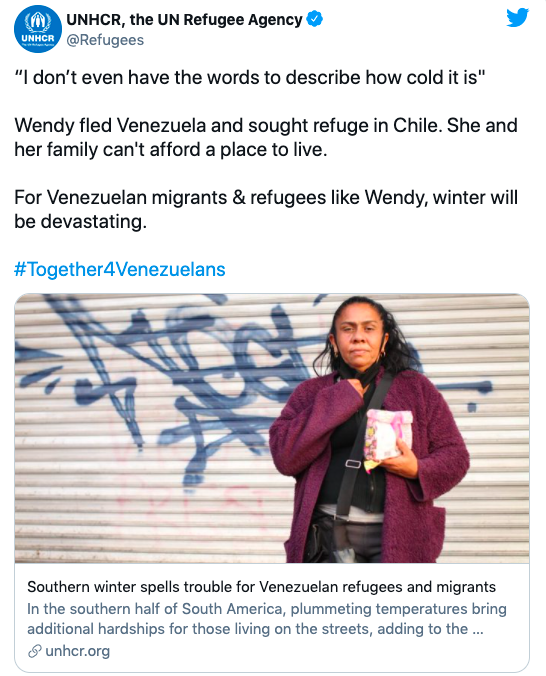 Screenshot photo from UNHCR’s twitter
The Canadian Deputy Minister for the Americas added: “The lives of nearly six million people have been disrupted, forced to leave their homes with little or no belongings, and in search of security, protection and dignity ”.
Last year, less than half of the funds needed to support reception were made available, leaving half of the refugees malnourished and up to nine out of ten without any source of income.
“The world helped, but it hasn’t been enough,” Grant said. The onset of winter in Latin America has worsened the already desperate situation for Venezuelans. They need everyone’s help, he added.
The agenda of the meeting
The main objectives of the next meeting in Ottawa are:
● Highlighting the significant progress made to date.
● Raise awareness of the main opportunities, priority areas and challenges, including the impact of the crisis on women and girls.
● Mobilize additional resources.
● Identify future actions to maintain focus on the crisis and help ensure compliance with commitments.
Grant said organizers of the Ottawa meeting are “optimistic” that they will reach the necessary funding amount, adding that they continue to seek more donors, including that from non-traditional sources.
Photo at the top of the article: Michael Grant, Canadian Deputy Minister for the Americas, Twitter