
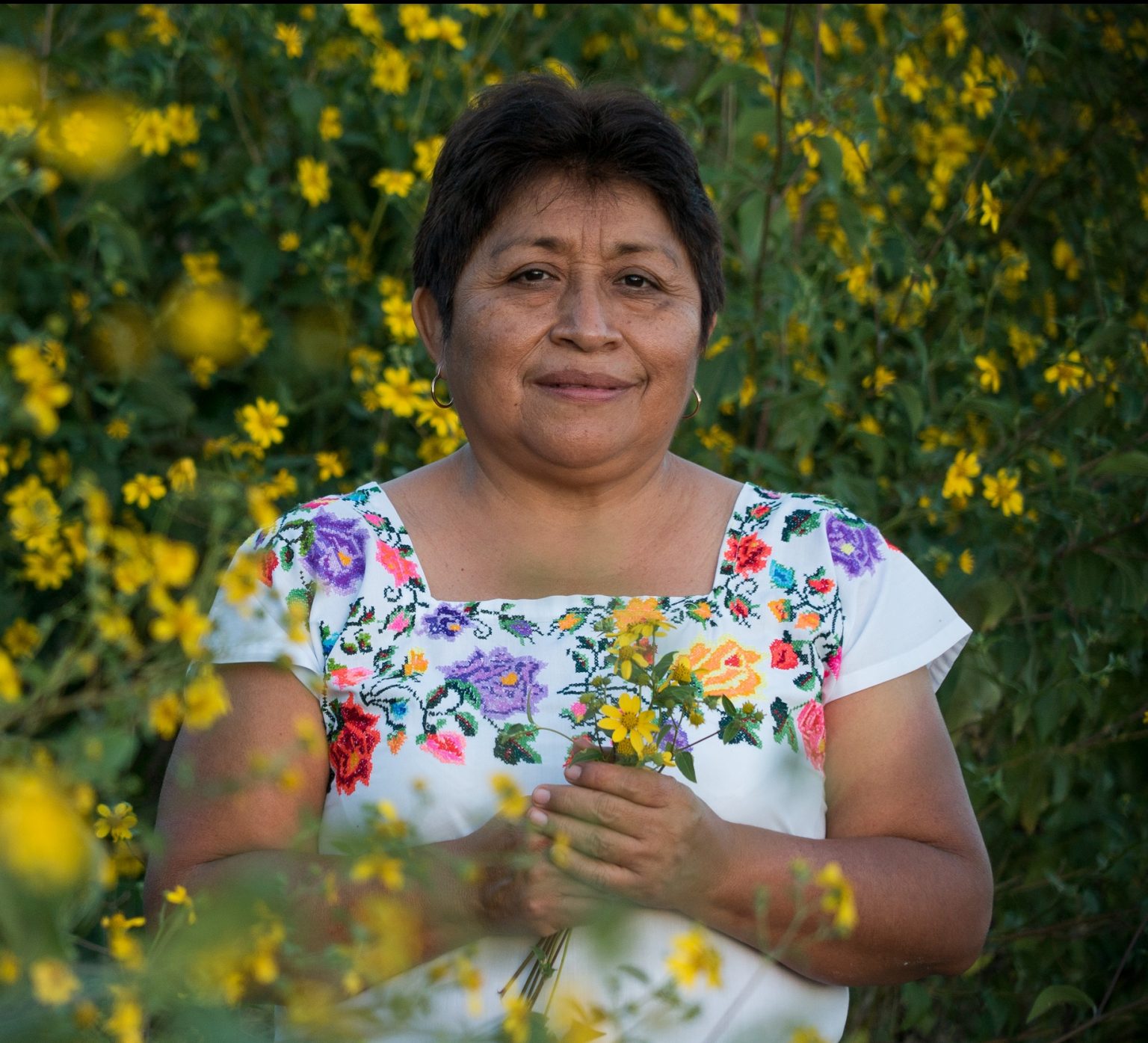
 Monsanto controls 90% of the international seed market and is a world leader in the production of herbicides. She, barely a two-hectare plot of land where she grows honey to support her family. However, Leydy Pech, the Mayan guardian of the bees, faced and beat the multinational.
Pech, a 56-year-old Mayan beekeeper, was awarded the Goldman Environmental Prize last year for his “historic fight” against the planting of transgenic soybeans in Mexico’s Yucatan Peninsula. Today, March 11, at 6.30 pm, she will give a talk for Canada about the role of women in protecting the environment, through the Committee for Human Rights in Latin America (CDHAL) and the Québec Association of Cooperation Organizations International (AQOCI), the Quebec Committee for Women and Development (CQFD).
In an interview, Pech assures that the most difficult thing for her and the women’s community was to understand the complexity and damage that the permission that the Mexican government had granted to Monsanto to plant transgenic soy in the territories of the Mayan communities of Hopelchén would cause. “We indigenous people did not know the impact that transgenics have,” he says.
But when in the Mayan community of Hopelchén we understood the terrible consequences of transgenic soy on our livelihoods, especially in beekeeping, we organized with other beekeepers’ organizations because transgenics especially damage the ecosystems on which bees depend, adds.
Pech, also known as the ‘lady of honey’, lives in a territory heavily affected by deforestation and toxic pollution from industrial agriculture. Ella Pech has a few apiaries that support her family finances. She explains that together with other women in the area, she is dedicated to the breeding and preservation of the melipona beecheii, a stingless wild species domesticated by the Mayan peoples of Mexico for hundreds of years.
Thanks to our work in the coalition, we were able to stop the planting of genetically modified soybeans by the Monsanto company in southern Mexico. The Supreme Court ruled that the government had violated the rights of the Mayans and suspended their planting, “and that was an important victory, but we have not won the battle,” says Pech.
“The economic interests of the Mexican government and in general of many other governments, do not allow them to protect the interests of indigenous peoples. We live in communion with nature and the jungle, water, forests, biodiversity are important. What from our ancestors we have cared for generations the government wants to sell to the highest bidder and without considering the impact. Conservation is important to me because I depend on my territory. Bees sustain our economy and are also essential for life, “he adds.
Bees are the heritage of our community, but they are at risk because deforestation and monocultures are killing them. One of the things we continue to defend is to protect ourselves against environmental damage associated with the increase in industrial agriculture. Not only we face the risks, but the planet.
“If they spray daily and kill the bees, we all lose. Therefore, I ask that in Canada also believe that there is a social responsibility; a responsibility of all. Everything we are defending serves the rest of the planet. We need help. Biodiversity is life … bees are life.
PHOTO CREDIT: Leydy Pech in front of tajonal flowers, source of nectar and pollen for bees. Photo: Goldman Environmental Prize.