
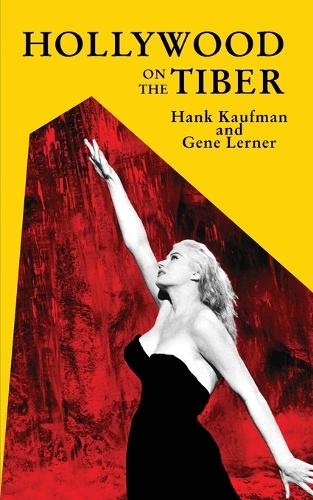
TORONTO – An English language version of the 1982 publication Hollywood on the Tiber was released last week. The tell-all memoir by Rome talent agents Hank Kaufman and Gene Lerner, dished on the lives of glamourous movie stars, and included anecdotes involving iconic actors and actresses like Sophia Loren, Shelly Winters, Robert Graves and Marlon Brando. And the enigmatic Brando, as expected, is the marketing lure for the English translation.
Kaufman and Lerner’s book details why Brando abruptly left the Italian premier of On the Waterfront in 1954, where he was apparently blindsided by the Italian dubbing of his performance. His agent, the book reveals, recalled Brando having a vesuvian reaction to what he felt was an abominable affront to the work. Squirming out of his seat Brando leaned in and whispered to his agent, “Get me out of here! I’m an actor, not a ventriloquist’s dummy…you feel like a goddam freak in a sideshow. Why didn’t somebody prepare me?”
Seventy-one years later and the Italian film industry is still heavily reliant on its dubbing talent. For decades, Italian voice actors have been the head of their class in the film dubbing space, competing with the likes of Spain, Germany, Brazil, China and India. Italy is the world’s premier dubbing country – but should this be a point of national pride?
For voice actors like the late Ferruccio Amendola (who voiced De Niro, Hoffman, Pacino and Stallone) it was. In his heyday, Amendola was the most in-demand dubber and reportedly earned $4M a year. But while Italians have unabashedly created an artform from the practice, its nefarious beginnings under Mussolini as a tool for censorship and propaganda begs the question – why is it still so popular?
For starters, there were practical uses for dubbing beyond Mussolini’s nationalist agenda. Dubbing was an integral part of the co-production model. It meant that producers across Europe could pool their resources and apply for grants and tax rebates from multiple government programs. This was one way Italian and European films could compete with the constant stream of Hollywood imports. European Co-productions brought foreign talent beyond their borders as dubbing allowed them to perform in their native tongue.
Italy’s commitment to dubbing also stems from the film equipment that they were using in the post war era. Much of it was war surplus, cameras used by military personnel. Most of these rudimentary cameras were too noisy, making it difficult for filmmakers to record sound on set.
In 2025 however, one would assume that most Italians would feel as mortified as Brando while listening to a dubbed performance. But despite a growing number of cinemas in Rome and Milano that show foreign films in their original language, the majority of Italian audiences simply prefer dubbed films to subtitled. The voice talent however is starting to feel a pinch from the streaming world – where the gigs tend to go to the cheapest, and not the best.
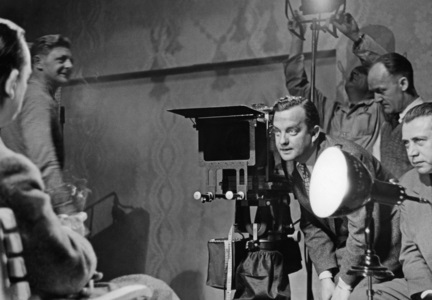
(Hollywood on the Tiber Book Cover Image, courtesy of Sticking Place Books; Roberto Rossellini on set, courtesy of SZ Photo, Bridgeman Images)

Massimo Volpe is a filmmaker and freelance writer from Toronto: he writes reviews of Italian films/content on Netflix